
Thanksgiving is next week, and for a lot of business owners and executives, the year is all but over. What’s being measured right now is what was achieved in 2026. The time you can influence most is the future: 2027 and beyond.
With the changing AI landscape, the next few years are going to be a time of significant change. And much of that change gets piled on frontline leaders. They’re the ones answering every question about it, and they’re the ones supporting employees through it.
You can redesign roles all you want, but someone still has to want to do them. If you create leadership roles nobody wants, you won’t have people to fill them. If you’re a business owner, or an executive who wants to make changes at the frontline leadership level, add one thing to your plan: a plan to attract, retain and motivate the people you’ll need in those roles.
The job keeps getting bigger
The numbers are moving in the wrong direction. Gallup found that, globally, manager engagement fell from 31% in 2022 to 22% in 2025, while engagement among individual contributors stayed close to flat.
At the same time, organizations are getting flatter and spans are getting wider. The average manager had 12.1 direct reports in 2025, up from 10.9 just a year earlier, and Gallup says team sizes have grown by nearly 50% since it began measuring in 2013. Much of that jump came from more teams of 25 people or more. Job postings for middle managers fell 42% between the spring of 2022 and the end of 2024, according to Revelio Labs. In a 2024 Gartner survey, 75% of HR leaders said managers are overwhelmed by their growing responsibilities, and 69% said managers aren’t equipped to lead change.
The work is getting more complex, too. As AI changes how work gets done, managers will lead a mix of people and AI agents, and answer for the work of both.
When we turn leaders into babysitters
Then there’s the work we add that has nothing to do with leading. I’ve watched leaders get handed hybrid adherence tracking, and I’ve watched it grow from an occasional report into a recurring administrative chore. Now there are headlines about what companies are doing about coffee badging, where people swipe in for an hour and head home. At some point, catching that will probably end up on a frontline leader’s plate too. Every hour spent there is an hour taken away from coaching and supporting their teams, the same teams that have grown bigger over the past few years.
If you’re asking leaders to do this, name the business goal it achieves. The usual answers, better collaboration and better performance, aren’t supported by the data. Researchers at the University of Pittsburgh studied S&P 500 companies that announced return-to-office mandates and found no significant improvement in profitability or market value afterward, while employee satisfaction fell.
I don’t support broad return-to-office policies, and I’ll be honest about why. They have a clear, disparate impact on women and caregivers. In a 2024 Upwork survey, 63% of C-suite leaders whose companies mandated an office return said the policy led a disproportionate number of women to quit. If you have a policy in place that disproportionately affects women and caregivers, there has to be a good reason for it. When collaboration and performance don’t hold up, what reason is left? To me, it feels mostly about control.
When you turn a frontline leader into a babysitter, you lose their strategic mindset. The whole idea of how they fit into the broader purpose of the business gets lost when they spend their time on administrative work that moves them further from it.
They’re closer than ever to starting their own thing
I believe frontline leaders are closer than ever to starting their own businesses. I say that as someone who left corporate America to start mine.
I’m in my mid-thirties, with 13 years of HR experience. That’s the stage where many people are still early enough in their careers to grow into strong leaders. For me, the pressure, the administrative burden and the politics that came with my role became more than I was willing to carry. I was doing more work than I felt I was being rewarded for. I would rather start my own business with no capital behind it than sit in a role where my soul slowly drains.
Frontline leaders are especially well positioned to make the same choice. Money is one of the biggest barriers to starting a business, and leaders generally earn more than the people they lead. They’ve already led people, so why couldn’t they lead their own business? Owning a business gives them the flexibility they’re craving, and AI gives them the tools and support to build it. This year, I’ve seen far more participation in innovation efforts like hackathons, as people discover they can bring their ideas to life faster than ever. If your company heavily limits AI support, your people can likely find that support on their own and start building in a day.
The numbers support it. Business applications hit a record of roughly 5.7 million in 2025, up from about 3.5 million in 2019, according to the Census Bureau. Women started 49% of new businesses in 2024, up from 29% in 2019, according to Gusto. Millennials are now the largest generation at work, at 36% of the U.S. labor force, and many of them, along with Gen Z, are renegotiating their relationship with work. Only 6% of Gen Zs and millennials in Deloitte’s 2026 survey said a leadership position is their primary career goal.
Starting a business is a lot of work, but it’s more rewarding and more purpose-driven, and you can lead the way you see fit. Of course, there’s privilege in being able to make that leap. Still, more and more people would rather take on that risk than stay in a leadership role that keeps getting harder.
What’s in it for the person in that seat?
You could argue that flatter organizations simply mean fewer leadership roles to fill. That’s true, and it raises the stakes. Every remaining frontline leader is responsible for more people, more change and more of the business’s results, so losing one costs more than it used to.
Most of the conversation about frontline leaders focuses on what the business needs from them. The question I keep coming back to is what’s in it for the person who sits in that seat. Why is it a role worth doing, and how will it help them grow and advance in their careers?
Leading people is an entirely different skill set from the job someone did before, and it’s learned mostly through experience. Set up well, the role teaches a leader how the business really runs, builds judgment that travels into any future role, and lets them see the impact of developing other people. Set up poorly, it’s a bigger workload with a small raise and a pile of administrative tasks. If you want people to choose that seat, show them the growth that comes with it, and make sure the job leaves room for that growth.
As you rework roles, take a minute with two questions. Is this a role that’s rewarding? Would I want to do it myself? And as more millennials and Gen Zers renegotiate their relationship with work, is this a role they’ll want to do?
What makes the job worth choosing
Many companies can’t fully compete with the freedom, flexibility and reward of running your own business. The ones that come closest offer the same things that make ownership appealing: freedom, creativity, and real impact on the processes and the work.
Small businesses are better positioned to offer that than they might think. Your leaders may not have the support and infrastructure a large company provides, but they probably have room to build. If you can give a frontline leader an avenue to shape how things get done, or to build something that doesn’t exist yet, that’s a real differentiator. It makes the job worth choosing for reasons that go beyond managing people. Flexible schedules and rewarding people for the outcomes of the business help, too.
Large employers have the structure small businesses lack, and that’s where the challenge comes in. Much of the flattening that has made headlines has happened at large companies, and that’s where some of the widest spans live. Then there’s the politics. The processes are usually already in place, so frontline leaders have less influence over them, and the red tape makes them hard to change. With so many levels between frontline leaders and the executives setting strategy, large employers need to take specific care of this group. Ask them for feedback, and give them a real way to change the things that slow their teams down.
Mid-sized companies sit in between. Many are adding structure for the first time, which makes this a good moment to decide how much room your leaders keep to shape it. Invite your frontline leaders to help build that infrastructure, and they’ll have a stake in making it work.
Where Erin helps
This is where I believe The Concierge, my HR app for owner-run businesses, can make the leadership experience better. My goal with Erin, the AI guide inside the app, is to take on some of the tougher decisions with leaders and give them the information they need to make those decisions quickly.
Take a coaching plan. A frontline leader might not have all the context they need to put someone on one. They want to be consistent, and they want to follow the right practices for your business. There’s no way a single frontline leader knows how every other team has handled a similar situation unless your leadership group shares consistently. Erin has that context, so she can bring it forward and help the leader decide quickly and fairly.
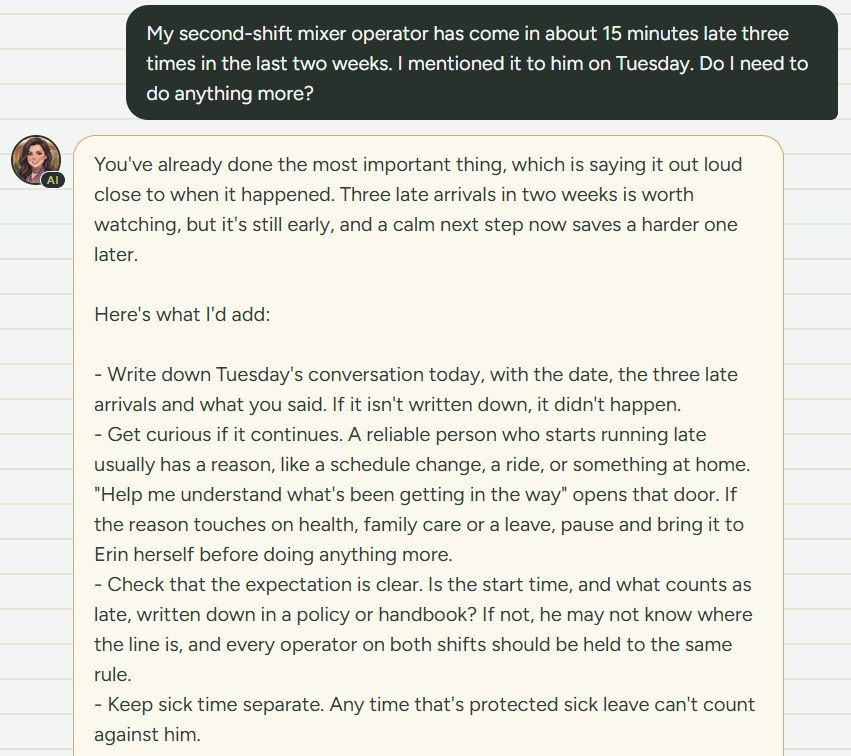
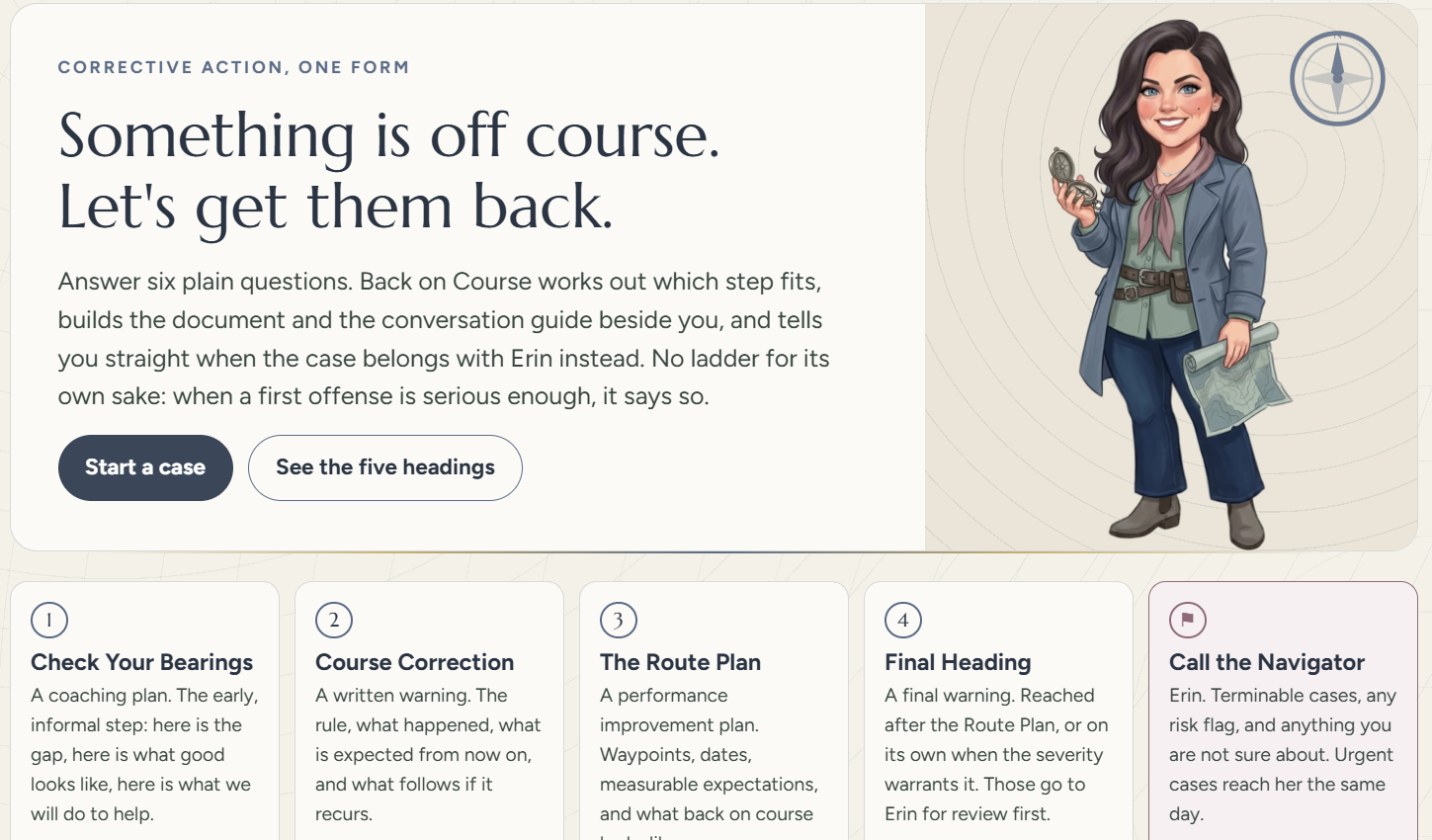
When the situation calls for a document, Back on Course asks six plain questions and works out which step fits. When the conversation feels hard, Game Plan lets a leader rehearse it first.
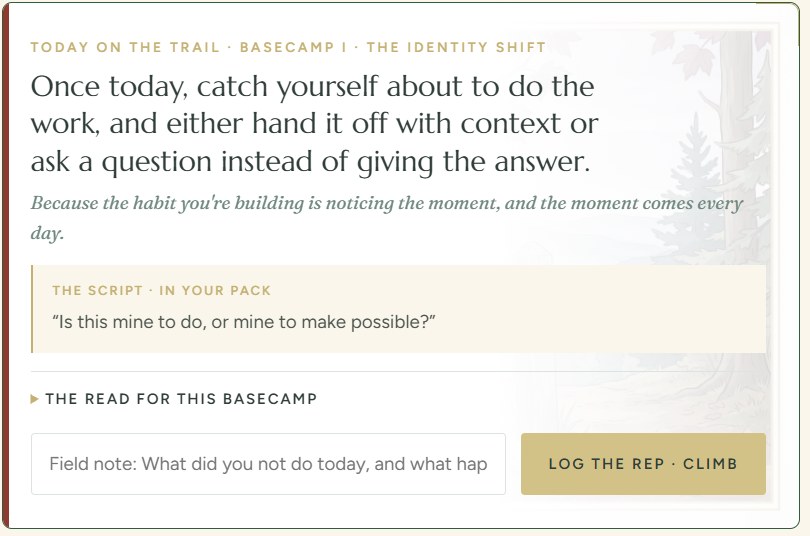
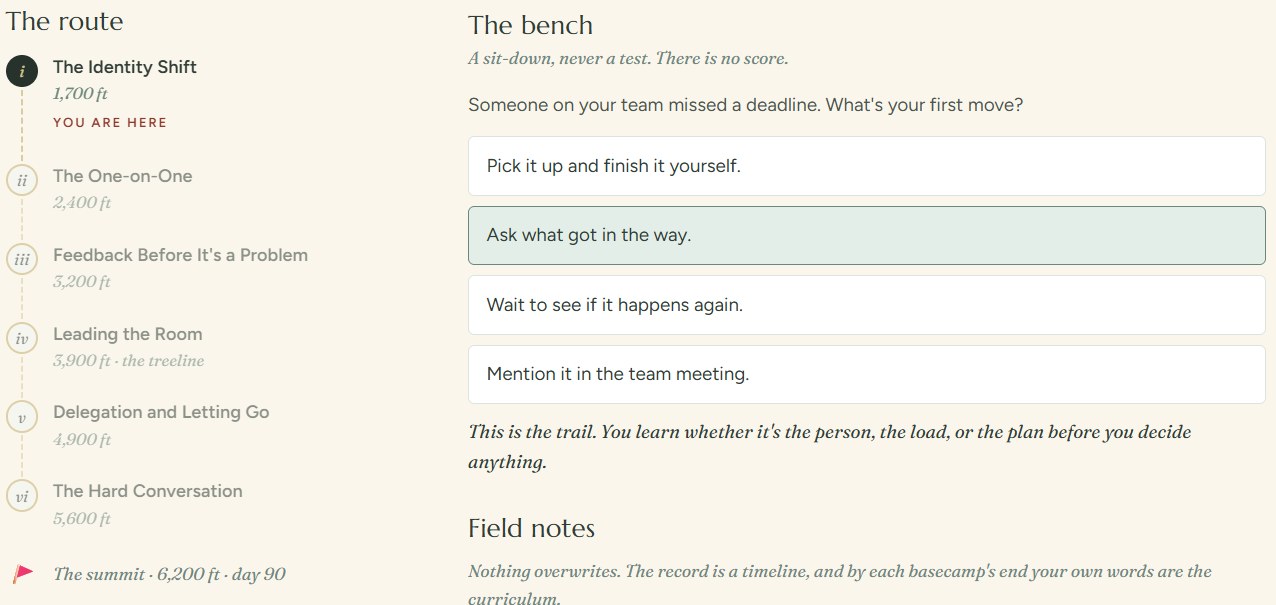
For a first-time manager, the Leadership Journey turns the first ninety days into one small rep a day. It moves through six basecamps on the shifts that matter most: the identity shift from doing the work to making the work possible, the one-on-one, feedback before it’s a problem, leading the room (including being honest with your own leadership about what your team can carry), delegation and letting go, and the hard conversation. Each basecamp comes with a short read, a script to keep in your pack, and a daily rep to practice. Leaders can rehearse with Trail Crew, three simulated team members, and they keep field notes that become their own record of what they’ve learned. When a real situation comes up, they can bring it to me at the Ranger Station, and anything involving discrimination, harassment, leave, a termination or pay goes straight to a person. That’s growth a leader keeps, wherever their career goes next.
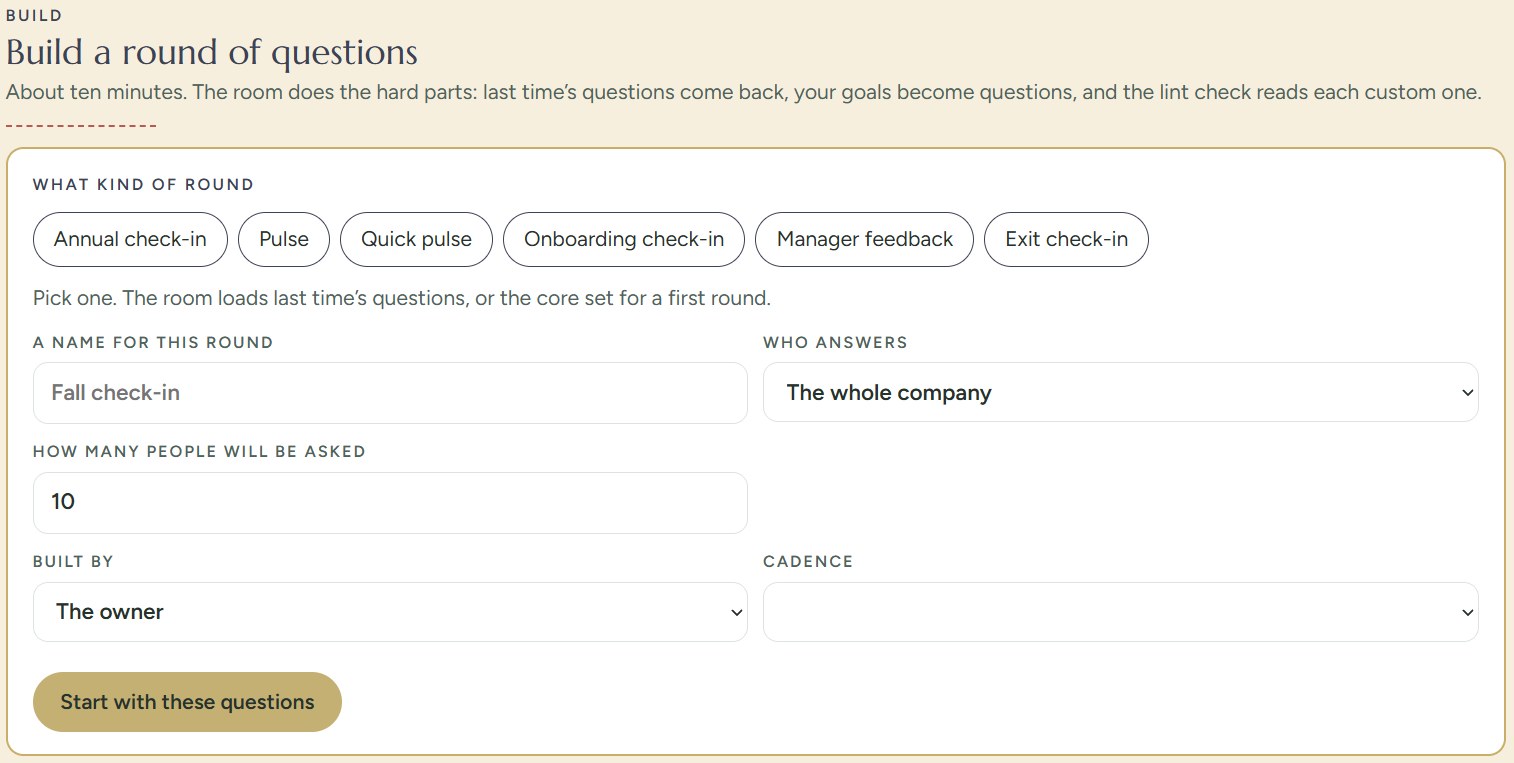
And when you want to know how things are really going, ask. Read the Room lets you build your own pulse surveys and check-ins, choose who answers, whether that’s the whole company or one team, and set a rhythm that fits your business. Erin suggests questions tied to your goals and reviews each custom question before it goes out. A manager feedback round shows where a team feels supported, and where its leader may need more support of their own.
One thing before the year ends
If you have plans to add to the role of your frontline leaders in 2027, make sure you’re also putting together a retention plan for them. Start with one question: what makes this a rewarding role to do? Then ask a second one: what’s changing at your company, and in your tools, to support the people leading your frontline?
If you’d like to see how the Concierge supports your leaders, I’d love to show you. The web app is available now, and the iOS and Android apps are on the way.
Sources
Gallup, Span of Control: What’s the Optimal Team Size for Managers? (2026)
Deloitte, The future of the middle manager (Revelio Labs postings data)
Gartner, Leader and manager development tops HR leaders’ 2025 priorities
Ding and Ma, University of Pittsburgh, return-to-office mandates study
Fortune on Upwork’s research, return-to-office mandates and women
U.S. Census Bureau, Business Formation Statistics (via FRED)